Connect this guide with the rest of your visit in the Islamabad trip planner. Read how the research is made and what its sources establish.
At a glance
Start here
- Treat Saidpur first as a lived settlement, not an open-air set.
- Separate facts stated by official sources from dates and stories that still need verification.
- Read the village together with the protected Margalla landscape around it.
- Ask before photographing people, homes, worship spaces or private activity.
01
See three Saidpurs at once
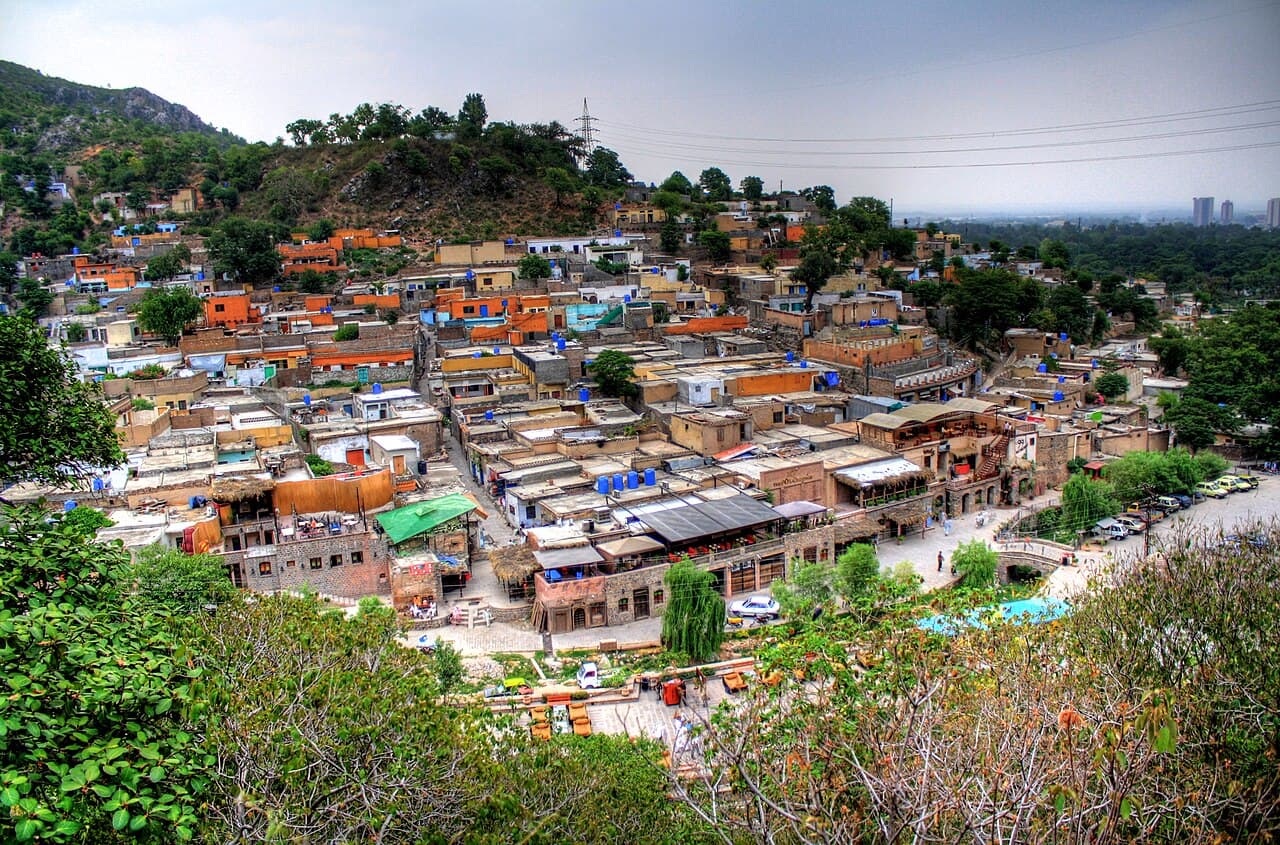
The visitor destination, the lived village and the protected-landscape settlement occupy the same ground. CDA's destination page promotes Saidpur's traditional character alongside galleries, handicraft shops and eateries. The wildlife ordinance compilation includes lands falling in Saidpur among areas declared as part of Margalla Hills National Park. CDA's environmental wing separately manages park conservation and the wider northern landscape. These official categories create different responsibilities and viewpoints.
Hold all three in mind while walking. A restaurant frontage is part of a visitor economy. A lane may also serve homes. A slope or stream line belongs to a larger ecological system. The easiest mistake is allowing the most curated surface to stand for the whole place. Instead of asking whether Saidpur is “authentic,” ask which use you are seeing, who maintains it and what evidence supports the story attached to it.
- Destination: the place presented to visitors.
- Settlement: homes, routes and ordinary community life.
- Protected landscape: ecological and legal context beyond the restaurant precinct.
02
Use an evidence ladder for old structures
Begin with what the official destination page actually establishes: CDA describes Saidpur as historical and cultural, says it preserves traditional roots and refers generally to cobbled streets and ancient temples. That wording does not date every wall, identify every building phase or prove a story repeated by a guide, caption or menu. Visual weathering is not a chronology.
Use three levels in your notes. “Officially stated” is material directly supported by a named public body. “Observed” covers form, material, repair or current use visible during the visit. “Needs verification” holds dates, patronage, former function and dramatic anecdotes until a museum, archival or archaeology source confirms them. This ladder does not make the visit less engaging; it prevents the interesting parts from being buried under false precision.
Sources: Capital Development Authority03
Read repair and reuse, not just age
Look for changes in stone size, mortar, roof treatment, doors, drainage and surface finish. These differences may indicate repair or adaptation, but do not assign dates without evidence. Then ask how the building is used now. A structure serving visitors, worship, residence or commerce belongs to a present social system as well as a heritage narrative.
Reuse creates productive questions. Which spaces are open to the public? Which elements have been designed for dining or display? Where does interpretation appear, and who authored it? Do not assume that a polished frontage is older or newer than a rough wall. Record the evidence, not the conclusion. If a sign names a conservation project or responsible body, photograph the sign for later research rather than paraphrasing it from memory.
04
Place the village in the Margalla landscape
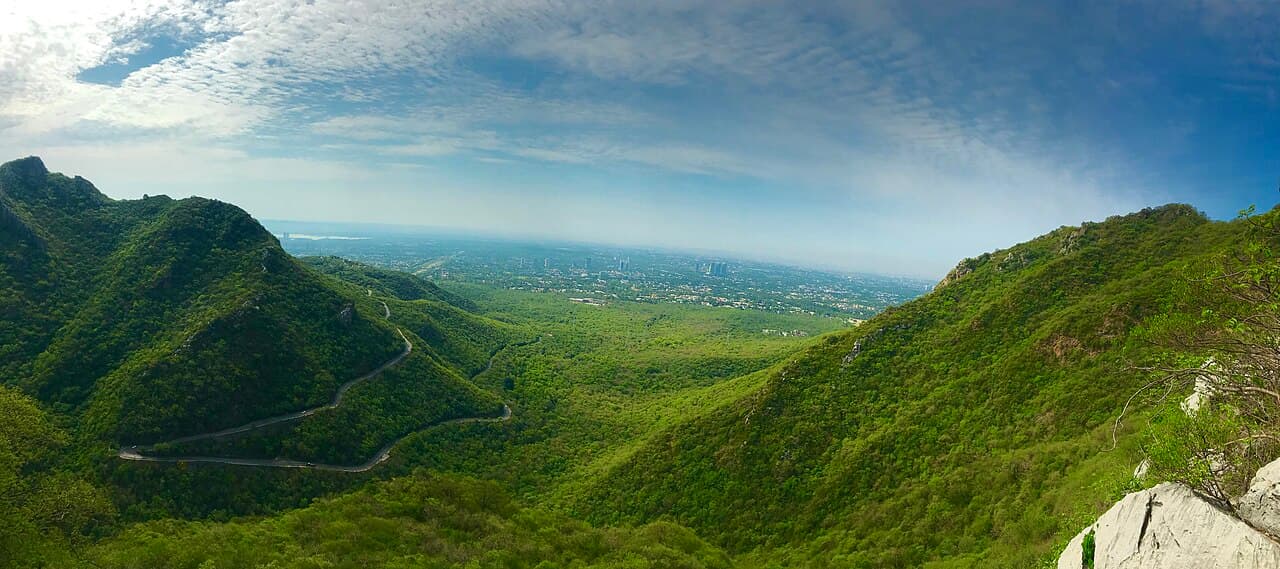
Saidpur is not merely “near the hills.” The federal notification reproduced in the Islamabad wildlife law includes lands in Saidpur within the national park declaration. CDA's environment page describes management of Margalla Hills National Park north of Margalla and Murree roads and identifies forest protection, fire control, afforestation and viewpoint maintenance among official functions. This gives the surrounding slopes institutional and ecological significance beyond scenery.
Observe how settlement edges meet vegetation, drainage and rising ground. Do not leave established public areas to chase a panoramic angle, remove plants or treat a protected slope as spare space. The national-park context also complicates the common contrast between an “old village” and a “new city”: the capital's planning documents treated rural life, landscape and national institutions as parts of the wider metropolitan framework.
Sources: Government of Pakistan via Capital Development Authority; Capital Development Authority; Capital Development Authority05
Photograph with boundaries
A public-looking lane is not permission to turn residents into background characters. Ask before making an identifiable portrait, especially where someone is working, worshipping or entering a home. Keep out of doorways and do not rearrange objects for a more “traditional” frame. Religious spaces require particular restraint; follow posted rules and local direction rather than copying another visitor's behaviour.
Caption buildings at the level the evidence permits. “Saidpur streetscape” may be accurate where “centuries-old temple wall” is not verified. Avoid editing out every sign of present life to manufacture timelessness. Vehicles, repairs, utility lines and active commerce can reveal how heritage space is inhabited now. A photograph becomes more useful when its caption says where the claim came from and what remains unknown.
- Ask before photographing identifiable people.
- Do not block homes, businesses or worship routes.
- Use cautious captions when a building's date or function is unverified.
- Keep signs of present-day use when they explain the place.
06
Do not borrow history from nearby sites
Islamabad has several foothill heritage narratives, including Shah Allah Ditta, which CDA and the Department of Archaeology and Museums describe separately. DoAM records active conservation work at the Shah Allah Ditta caves. That evidence belongs to Shah Allah Ditta, not Saidpur. Geographic proximity and a shared tourist circuit do not allow dates, religious sequences or archaeological findings to migrate from one site to another.
This is a common source error: a broad “places near Islamabad” article blends facts until every village seems to contain the same caravan route, cave and succession of faiths. Keep a separate note for each site and attach each claim to its source. If your Saidpur research leads to Shah Allah Ditta, plan a different visit rather than treating one as proof for the other.
Sources: Department of Archaeology and Museums; Capital Development Authority07
Leave with better questions
A strong Saidpur visit may produce more questions than dates. Which buildings retain older fabric? How were public and private spaces changed for the visitor economy? What conservation records exist beyond promotional summaries? How do national-park rules interact with village life? These questions can guide further work with archives, archaeology authorities and community knowledge without pretending a short visit settles them.
Before leaving, review five notes: one officially supported fact, one physical observation, one example of current use, one respectful uncertainty and one question for a better source. That small record is more valuable than a confident paragraph assembled from visual impressions. Saidpur deserves attention because it complicates Islamabad's planned-capital image, not because it can be flattened into an “old world” backdrop.
Useful answers
Reader questions
Is Saidpur Village inside Margalla Hills National Park?
The federal national-park notification reproduced in CDA's Islamabad wildlife law includes lands falling in Saidpur among the declared areas. The notification establishes protected scope; it does not establish identical public use across every listed parcel.
Sources: Government of Pakistan via Capital Development AuthorityCan I date Saidpur's buildings by appearance?
No. Weathered material, repairs and traditional design are not reliable dates. Record what you observe and look for a building-specific archaeology, conservation or archival source before assigning a period.
Sources:Does the official CDA page provide a full Saidpur history?
No. It gives a short visitor-oriented description and general heritage claims, not a building inventory or detailed conservation chronology. Treat it as a starting point and keep unsupported specifics out of captions.
Sources: Capital Development AuthorityAre Saidpur and Shah Allah Ditta the same heritage site?
No. Official CDA and DoAM material describe them separately. Facts about the Shah Allah Ditta caves or conservation project should not be attached to Saidpur without independent evidence.
Sources: Department of Archaeology and Museums; Capital Development AuthorityRead the evidence
Sources and further reading
These sources support the relevant sections above. Plans and comparisons are editorial suggestions. Check operators for current arrangements.
- CDA-Destination ↗Capital Development Authority · Research date 14 September 2026
CDA's visitor description of Saidpur and its separate description of Shah Allah Ditta.
- The Islamabad Wildlife (Protection, Preservation, Conservation and Management) Ordinance, 1979 ↗Government of Pakistan via Capital Development Authority · Research date 14 September 2026
The reproduced 1980 notification listing Saidpur lands among the areas declared as Margalla Hills National Park.
- CDA-Enviromental Protection ↗Capital Development Authority · Research date 14 September 2026
CDA's stated forest, fire, afforestation, viewpoint and wider national-park management functions.
- Interim Report on the Review of Master Plan of Islamabad (2020–2040) ↗Capital Development Authority · Research date 14 September 2026
The original metropolitan framework's inclusion of national park, rural life and model villages alongside the planned city.
- Projects ↗Department of Archaeology and Museums · Research date 14 September 2026
The separate official conservation project for Shah Allah Ditta Caves, used only to prevent conflation with Saidpur.