Living in Islamabad: An Honest Sector-by-Sector Guide
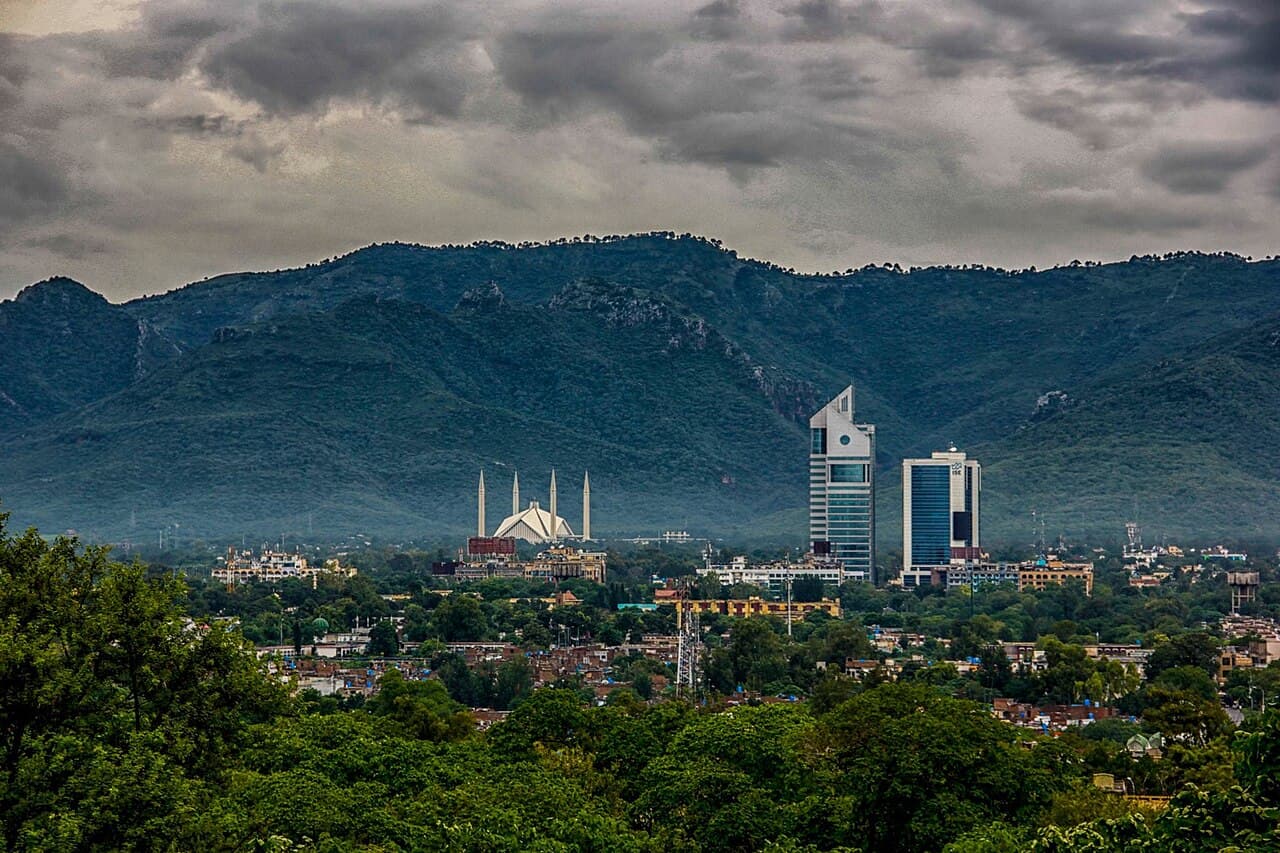
For expats, relocating Pakistanis, and anyone trying to choose between F-7 and G-11: an unvarnished guide to what each zone of Islamabad actually costs to live in, what the schools are like, where you'll buy groceries, and which sectors are genuinely walkable.
Islamabad is a planned city, which means the question of where to live is unusually structural. The sector system — a grid of lettered zones (F, G, E, I, H, B) subdivided by numbered sub-sectors — determines your rent, your commute time, your school options, your grocery access, and to a significant degree your social circles. This is not a real estate promotion. It is the guide that someone who has lived here should have given you before you signed the lease.
Understanding the Grid: A Quick Orientation
Islamabad's sectors run broadly from the Margalla Hills in the north to the Rawalpindi border in the south. The F-sectors (F-5 through F-11) are the city's premium residential spine, running parallel to the hills. The G-sectors lie immediately south of the F-sectors and are the city's workhorse residential zones — more affordable, more densely populated, still well-maintained. The E-sectors (E-7, E-8, E-11) are newer developments to the east, increasingly popular with young professionals. The I-sectors (I-8, I-9, I-10) are the working-class southern zone. DHA and Bahria Town are gated suburban developments that operate outside the sector grid with their own rules, amenities, and social dynamics.
The F-Sectors: Upscale, Walkable, Expensive
F-6 — Old Islamabad Money
F-6 is the city's most prestigious address and carries the price to match. A 3-bedroom apartment in F-6 runs PKR 130,000–220,000 per month; a modest house in F-6/4 approaches PKR 350,000–500,000 per month. What you are paying for is proximity to Markaz — the original commercial centre — walkability to quality restaurants, the diplomatic enclave adjacency, and the quiet, tree-lined streets that F-6 has preserved while the rest of the city developed. For families, the F-6 schools include some of Islamabad's best private options within walking distance. The downside: parking is increasingly difficult in F-6 Markaz, and the housing stock is older and less energy-efficient than E-sector equivalents.
F-7 — The Sweet Spot
F-7 is where most people who want the F-sector lifestyle and cannot afford F-6 end up, and it is largely a good compromise. Kohsar Market anchors the food and retail scene. The streets are wide and tree-lined. A 3-bedroom apartment runs PKR 90,000–160,000 per month. F-7/2 and F-7/3 are the most desirable sub-sectors; F-7/4 is slightly more commercial and noisier. The Islamabad Model College and several top-tier private schools are in or adjacent to F-7. For expats and newcomers, F-7 is the default recommendation: it is central, walkable, has the best cafe concentration in the city, and is well-served by ride-hailing services. The Margalla Hills are a 15-minute drive from F-7's northern edge.
F-8 and F-10 — Family Zones
F-8 and F-10 are the city's most settled, family-oriented residential sectors: quieter than F-7, with larger plot sizes and a higher proportion of owner-occupied houses rather than rental apartments. F-10 Markaz has developed a solid secondary commercial strip. Rents for a 3-bedroom house in F-8 run PKR 100,000–180,000 per month; F-10 is slightly cheaper at PKR 80,000–150,000. Both sectors have access to Islamabad's best private school clusters — the grammar schools and O-level institutions that anchor the F-8/F-10 corridor are among the city's most competitive admissions. Grocery access is excellent: both sectors have large departmental stores and regular fruit-and-vegetable cart networks.
F-11 — The Newer Premium
F-11 is the newest fully developed F-sector and has the freshest infrastructure. The housing stock is more modern, the roads are wider, and the sector has been planned with more parking provision than the older F-sectors. A 3-bedroom apartment runs PKR 70,000–130,000 per month. The commercial development in F-11 Markaz is still maturing — the restaurant and retail scene is thinner than F-7 — but the proximity to the Margalla Hills and the larger apartment layouts make it the best value in the F-sector corridor. The MPCHS (Multi-Professional Cooperative Housing Society) area within F-11 is a micro-community with its own schools, a mosque, and a small commercial strip that functions almost as a self-contained village.
The G-Sectors: Residential Backbone
G-9 and G-10 — The Middle Ground
G-9 (Karachi Company) and G-10 are the city's most functionally complete middle-class sectors. Both have well-established Markazes (commercial centres), multiple schools, hospitals within the sector, and good public transport access via the Islamabad Metrobus route. Rents for a 3-bedroom apartment in G-10 run PKR 45,000–80,000 per month — roughly half the F-7 equivalent. The trade-off is density: both sectors are more populated, parking is tighter, and the noise levels are higher than the F-sectors. For Pakistani families relocating from other cities on a professional salary, G-10 represents the most practical starting point: affordable, centrally located, and with every urban amenity within the sector.
G-11 — The Best G-Sector Value
G-11 has improved substantially over the past decade and now represents arguably the best rent-to-quality ratio in the city. The sector is well-planned, the commercial strip in G-11 Markaz is growing, and the recent road improvements have cut commute times to the F-sector significantly. A 3-bedroom apartment runs PKR 40,000–70,000 per month. Several international and private schools have opened G-11 campuses in response to the sector's growing families. The Islamabad Wildlife Management Board's Margalla access via the G-11 approach road is underutilised — Trail 3 access from G-11 involves a shorter drive than the main F-6 approach.
The E-Sectors: Newer, Quieter, Family-Friendly
E-7 and E-8 — Embassy Belt East
E-7 and E-8 sit east of the Diplomatic Enclave and carry some of that adjacency's premium. Several embassies and international organisations have staff housing in E-7, which gives the sector a genuinely international character. Rents are high for the G-sector equivalent square footage: a 3-bedroom apartment in E-7 runs PKR 80,000–140,000 per month. The schools in E-7 include some of the city's strongest international curriculum options. For expats working in the diplomatic or NGO sector, E-7 is often the most practical choice: the commute to the Diplomatic Enclave is minimal and the sector has a walkable commercial strip along Street 1.
E-11 — The Young Professional Hub
E-11 has been the fastest-developing sector in Islamabad for the past five years. New apartment towers, a maturing restaurant scene, and lower rents than equivalent F-sector addresses have made it the sector of choice for young professionals, startup founders, and recently returned overseas Pakistanis. A 3-bedroom apartment runs PKR 60,000–110,000 per month. The E-11 school landscape is still developing — the sector's growth has outpaced its educational infrastructure, and many E-11 families send children to F-sector schools. Grocery access is good and improving: Metro Cash & Carry has a large E-11 outlet. The main downside is distance from the city centre and from the Margalla Hills' main trail access points.
The I-Sectors: Budget Living in the South
I-8, I-9, and I-10 are Islamabad's working-class and lower-middle-class residential zones, and they are misunderstood by the premium-sector crowd. These sectors are not unsafe or poorly maintained — they are simply more densely residential, less polished, and significantly cheaper. A 3-bedroom house in I-8 runs PKR 30,000–55,000 per month. The I-sector dhabas and local food markets are where Islamabad's best street food lives. Public transport from the I-sectors to the G and F-sectors via Metrobus is direct and frequent. For students, recent graduates, or anyone prioritising budget over address, I-8 in particular is a functional and surprisingly pleasant place to live.
DHA and Bahria Town: The Gated Alternative
DHA Islamabad and Bahria Town sit outside the CDA sector grid and operate as separate planned communities with their own security, utilities, and commercial infrastructure. The value proposition is complex. On one hand, the infrastructure inside both developments is genuinely superior to most CDA sectors: wider roads, fewer power cuts, better security, newer housing stock. On the other hand, both are car-dependent in a way the sector grid is not — without a car, daily life in Bahria Town is difficult. A 3-bedroom house in DHA Phase 2 runs PKR 120,000–200,000 per month; Bahria Town equivalents range from PKR 80,000–160,000 per month. The social environment in both developments is suburban in a way that differs substantially from the more mixed, urban energy of the F and G sectors.
Schools: The Real Driver of Neighbourhood Choice
For families with school-age children, the school question should precede every other consideration. Islamabad's top private schools — Beaconhouse Margalla Campus, The City School, Froebel's International, Islamabad Grammar School, and the Foundation Public Schools — are concentrated in the F-6 to F-11 corridor. The international schools (ISOI, International School of Islamabad) are in the E-sector/Diplomatic Enclave area. If you have a specific school in mind, choose your sector accordingly and work backwards to the rent budget — the school commute in Islamabad's traffic is the single variable most likely to erode quality of life if it is not planned carefully from the beginning.
Grocery and Daily Life
Every F-sector and G-sector has daily life covered adequately. The large departmental stores — Imtiaz (multiple locations), CSD Canteen (for military families), and Macro — are distributed across the city. The vegetable cart networks that circulate through residential streets in all sectors mean that fresh produce is often more accessible than in cities without this informal retail infrastructure. The difference between sectors is not access to basics but access to quality — imported items, specialty ingredients, and premium grocery chains cluster in the F-sectors and in the DHA/Bahria commercial areas.
Story
Lifestyle
Reading time
9 min
Legacy editorial
First published 13 May 2025
Verify changing facts and prices independently.
More scenes from the destination
General destination planning
Check current details before you go
These official links are general planning resources, not evidence for this article. Opening hours, fares, prices, access rules and businesses can change, so confirm details independently for your dates.
Taqi Naqvi
AI product builder, writer, and Islamabad enthusiast. Building the Top 10 network to document the best of Pakistan's cities - honestly.
Connect on LinkedIn →