Islamabad's Weekend Hiking Calendar: A Month-by-Month Guide
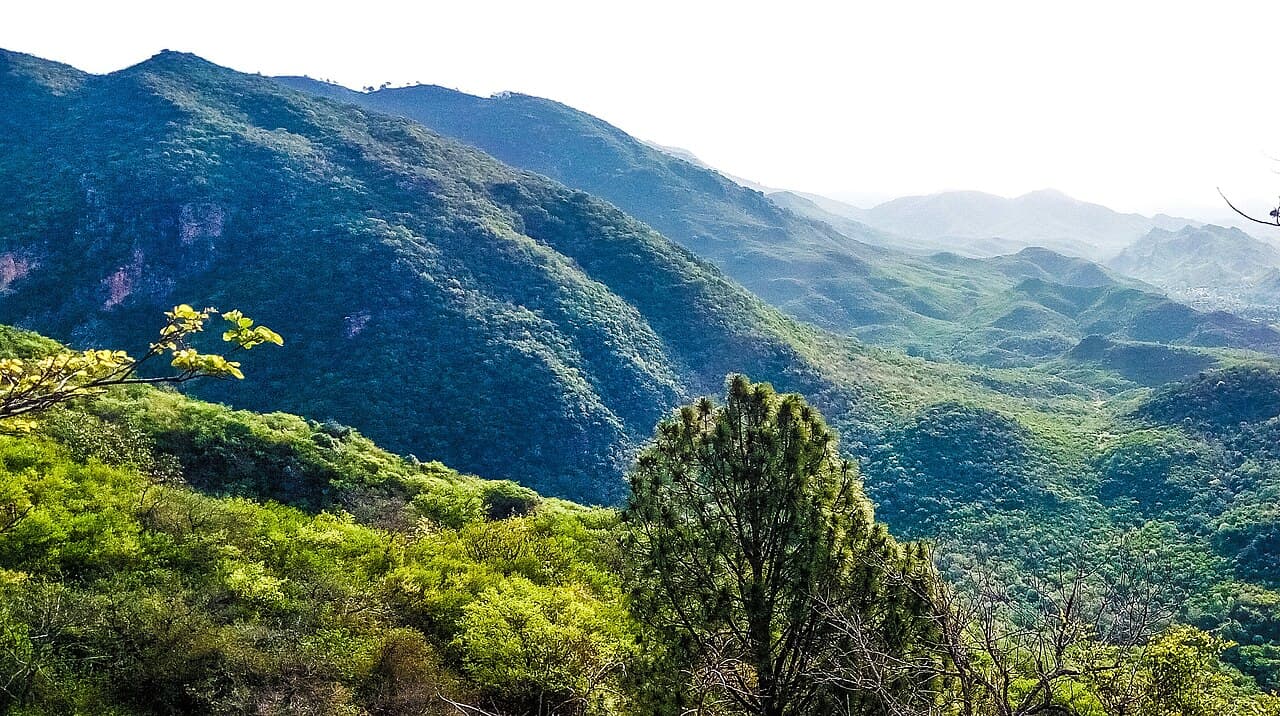
The Margalla Hills hike differently depending on the month. Spring wildflowers in March, monsoon waterfalls in August, golden autumn light in October — here is exactly which trails to hike and when, including IWMB rules, closures, and wildlife spotting windows.
Experienced Islamabad hikers know something that the tourist guides do not capture: the Margalla Hills are essentially four different places depending on the season you visit them. The landscape, the wildlife, the trail conditions, and the quality of the experience change so substantially from January to December that a hiker who only visits in one season is missing three-quarters of what the hills offer. This is a calendar built from years of consistent trail use — honest about the bad months, specific about what each good month actually offers.
January — The Clear Month
January is Islamabad's finest month for long-distance visibility and cold-air clarity. The smog that occasionally layers over the capital in November and December has usually cleared by the third week of January, and morning temperatures on the upper trails drop to 4–8°C. Trail 6 is at its best in January — the ridge walk offers views to distant snowfields and the air is dry enough to carry sound clearly. Dress in proper layers; the temperature difference between the trail base and the upper ridge is significant. Wildlife highlight: barking deer are most visible in January mornings, moving between the forest cover below Trail 4 and the open slopes above. Start no later than 7 a.m. to catch the best light.
February — Pre-Spring Transition
February brings the first signs of the Margalla awakening. The wild olive trees begin showing new growth, and the paper mulberry — the city's dominant urban tree, which the IWMB has long sought to remove from the hills due to its allergen production — pushes out its catkins in late February, triggering the capital's notorious allergy season. For hikers without pollen sensitivity, February is excellent. The trails are dry and firm, the days are lengthening, and the crowds that build by March have not yet arrived. Trail 3 and Trail 4 are the picks for February — accessible, comfortable, and showing the first green shoots of the spring flush. Bird activity picks up noticeably; the grey francolin becomes loudly territorial in the lower slopes.
March — Wildflower Season
March is the month Islamabad's hiking community waits for. The spring wildflower bloom in the Margalla Hills is genuinely spectacular by the second week of March: yellow mustard covers the lower agricultural land visible from the trail ridges, wild iris pushes up along the moist gullies of Trail 5, and the purple flowers of the rosemary-scented wild thyme carpet the open sections above Trail 6. Trail 5 is the March trail of choice — the combination of dense wildflower coverage in the valley sections and the upper ridge views creates conditions that are, by any honest measure, beautiful. IWMB guidance note: Trail 6 requires a permit obtained at the Margalla Hills National Park office near F-6; the permit process is simple and free but mandatory, and rangers have begun enforcing this in the spring season when crowds increase.
March Wildlife Highlights
- Crested lark nesting along Trail 3 lower sections — do not approach nest sites
- Indian pond heron in the seasonal streams on Trail 5
- Occasional leopard pugmarks reported on upper Trail 6 — a reminder to hike in groups and make noise
- Peafowl in the agricultural margins near the Trail 3 base — a genuinely surprising sight thirty minutes from Islamabad's city centre
April — The Last Comfortable Month Before Heat
April is excellent but time-limited. The wildflowers of March are replaced by a deep, established green, and temperatures remain manageable for all-day hikes — 18–26°C on the trails. By late April, afternoon temperatures on south-facing slopes begin to feel oppressive, and the window for comfortable hiking narrows to mornings only. Trail 4 and the Trail 3/5 combination loop are the April recommendations: the tree canopy is at its densest green and provides shade that becomes genuinely meaningful as the month progresses. This is also the month when the migrating raptors pass through — April's skies above the Margalla ridge are worth scanning for steppe eagles and short-toed snake eagles on thermals.
May and June — Adapt or Stay Home
May and June are challenging. Temperatures on the open upper trails reach 38–42°C by 10 a.m., and the humidity begins rising ahead of the monsoon. Hiking in these months is strictly a pre-dawn activity: start at 4:30–5 a.m., turn back by 8 a.m. without exception. Trail 3 remains manageable in early mornings due to its canopy cover. Trail 6 in May or June is inadvisable for all but the most heat-adapted hikers. The payoff for May's discomfort is the golden wild grasses on the upper ridge, which catch the early light in a way that rewards the very early start. Carry at least 2.5 litres of water even for short morning hikes.
July and August — Monsoon: The Brave Hiker's Reward
The monsoon is the most divisive season among Islamabad's hiking community. The conventional position is to stay off the trails. The contrarian view — held by those who have experienced a Margalla post-rain morning — is that July and August at their best are the most beautiful months of the entire year. The hills turn a luminous, implausible green. Seasonal waterfalls appear on the northern face. The air smells of wild herbs and wet earth. The birding is extraordinary.
Read and follow the current IWMB monsoon advisories, check in with the ranger post, and do not hike during active rain or thunder. No post-rain trail is guaranteed safe: mud, runoff, falling material, heat, and wildlife conditions change quickly. Choose a route only after staff confirm access and turn back when footing or weather deteriorates.
September — The Transition Back
September is the monsoon's exit month — sometimes dramatic, sometimes quiet. The hills remain intensely green from the accumulated rainfall, and the temperatures begin dropping to tolerable levels in the mornings. By mid-September, hiking before 7 a.m. feels genuinely cool again, and the lingering monsoon green makes Trail 5 particularly photogenic. Bird migration picks up in late September — the Margalla Hills sit on a significant migratory flyway, and serious birders time a September visit around the passage of wading birds and flycatchers moving south.
October — The Best Month
If you can only hike the Margalla Hills in one month, make it October. The monsoon green has not yet faded to the dry browns of winter, the temperatures are perfect (16–24°C on the trails), the light is golden and low-angled throughout the day, and the air is clear in a way that gives visibility to distant peaks. All trails are excellent in October, but the full Trail 6 ridge walk — the most demanding route — earns its difficulty most completely in October, when the effort of the climb is rewarded by views and conditions that simply do not exist in other months. October is also when the chir pine and wild olive begin their autumn colour shift, subtle by European standards but noticeable and beautiful in its own register.
October Wildlife Calendar
- Crested porcupine — nocturnal, but dens visible near Trail 4
- Large-eared pied bat colonies roosting in the rocky sections of Trail 6
- Migratory warblers and flycatchers in the lower forest — Trail 4 is the birding pick
- Wild boar family groups — maintain distance, do not approach
November and December — The Winter Reward
November brings the first cold snaps and the end of tourist-season crowding. The trails thin out dramatically — most fair-weather hikers abandon the hills by November — which means Trail 5 and Trail 6 become genuinely quiet spaces. December's occasional snowfall on the upper Margalla ridge creates conditions that feel exotic thirty minutes from a capital city: a snow-dusted pine forest, the city visible below in crisp winter air. The snow rarely persists below 900 m and does not typically affect Trail 3, but the upper trails should be checked with IWMB before a December ascent. Sunrise in November and December is late enough (after 7 a.m.) that a 6 a.m. start gets you on trail in the dark — carry a headlamp.
IWMB Practical Rules: What You Must Know
- Entry fees are collected at the main kiosks: PKR 20–50 per person depending on the entry point
- Trail 6 permit is required and obtained free from the National Park office — walk-up on the day is usually possible outside peak season
- No open fires anywhere on the trails at any time of year — the dry season fire risk is extreme
- No camping without prior IWMB authorisation — overnight permits exist but must be arranged in advance
- Dogs on leash on all trails — the Margalla wildlife population includes prey species sensitive to uncontrolled dog presence
- Pack out all waste — the IWMB has significantly increased enforcement and fines have been issued
Story
Nature
Reading time
8 min
Legacy editorial
First published 5 May 2025
Verify changing facts and prices independently.
More scenes from the destination
General destination planning
Check current details before you go
These official links are general planning resources, not evidence for this article. Opening hours, fares, prices, access rules and businesses can change, so confirm details independently for your dates.
Taqi Naqvi
AI product builder, writer, and Islamabad enthusiast. Building the Top 10 network to document the best of Pakistan's cities - honestly.
Connect on LinkedIn →