Rawalpindi's Best Food That Islamabad Doesn't Want You to Know About
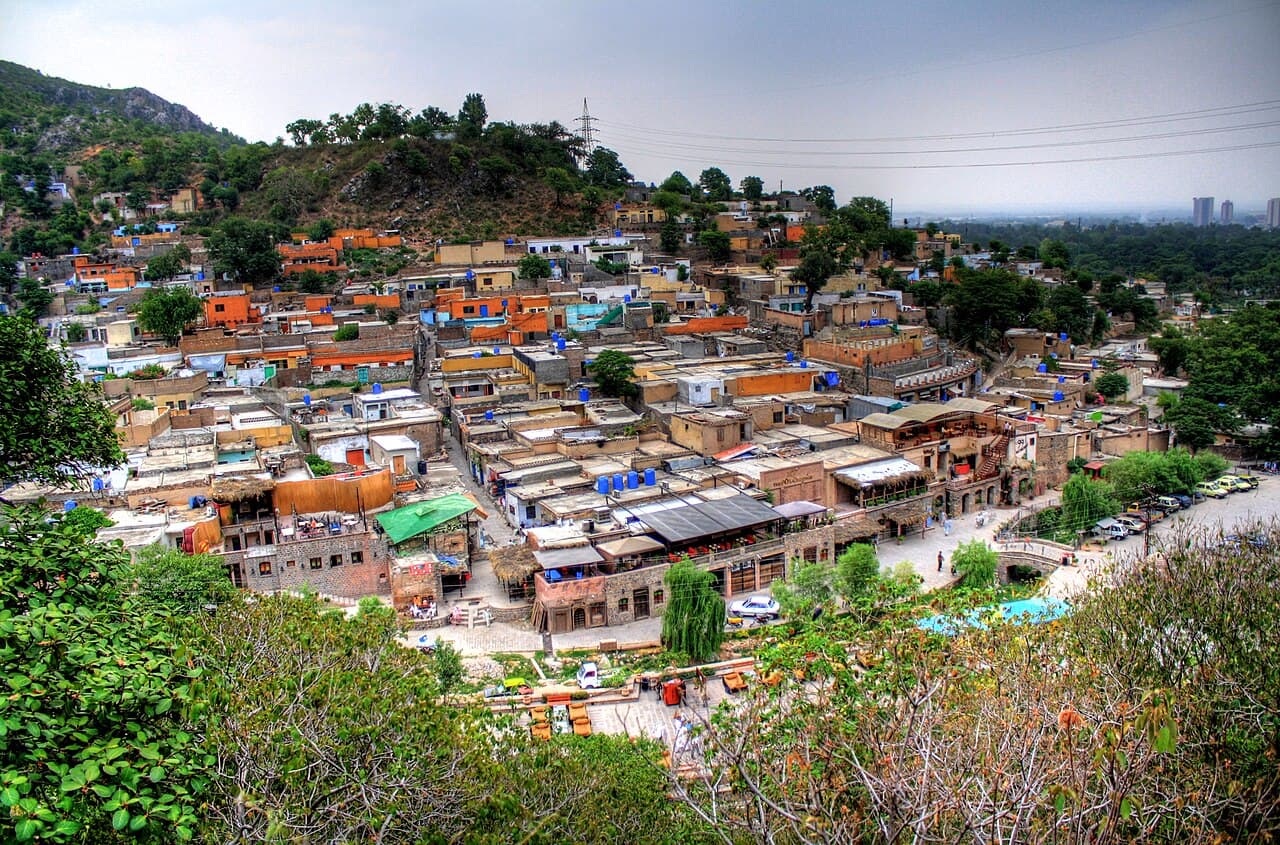
Twenty minutes from Islamabad's gleaming F-sectors lies a food city that is older, louder, cheaper, and — in many key categories — better. Here is the honest guide to Raja Bazaar street food, Kartarpura's famous food street, Saddar's old restaurants, and why the Pindi biryani debate is not actually a debate.
There is a quiet condescension in how Islamabad discusses Rawalpindi. The twin cities are administratively distinct but geographically inseparable — you cross from one into the other without noticing the boundary marker. Yet within certain Islamabad circles, eating in "Pindi" is treated as a slight compromise, a concession to nostalgia or budget. This is wrong in the most important way a food opinion can be wrong: it misidentifies the better food.
Rawalpindi is a food city. Its street food culture runs deeper, its old restaurants have longer institutional memories, and its prices are calibrated to a population that expects value. Islamabad's glossy restaurant scene is impressive on its own terms. But for specific categories — biryani, nihari, halwa puri, street kababs, and the entire universe of bazaar eating — Rawalpindi is not the consolation prize. It is the destination.
Raja Bazaar: The Original Food Street
Raja Bazaar is Rawalpindi's oldest and most dense commercial hub, and its food is embedded in the bazaar fabric in the way that cannot be replicated in a planned commercial strip. The cooking here is not oriented toward the Instagram audience; it is oriented toward the bazaar workers, the traders, and the families who have been eating here for generations.
Haji Sahib Paye
The most important breakfast in the twin cities. Haji Sahib's shop in Raja Bazaar serves paye — slow-cooked trotters in a rich, gelatinous broth — that has been drawing customers since before Islamabad existed as a city. The broth cooks from 10 p.m. onwards for the next morning's service; by 8 a.m. the stock is sold and the shop closes. A full bowl with naan is PKR 350–500. The clarified fat that pools on the surface of the broth is not removed before serving — this is intentional. Eating here requires an early commitment and the willingness to locate a shop that has no sign, no number, and is found entirely by asking anyone in the bazaar to point you toward it.
The Samosa Shops of Raja Bazaar
Islamabad has adequate samosas. Rawalpindi has better ones, and the Raja Bazaar variety is the benchmark. The filling is the distinguishing factor: a dry, heavily spiced potato and pea mixture with cracked cumin and dried chilli that has been cooked down until it holds its shape rather than the wet, starchy filling common elsewhere. The pastry is fried to a crunch that survives the few minutes of transit from the fryer to your hand. PKR 40–60 per piece. Eat standing. Do not travel with them.
Kartarpura Food Street: Organised Eating in the Old City
Kartarpura Food Street is Rawalpindi's answer to Lahore's famous gourmet mile — a semi-organised strip of established restaurants in a historic commercial area that draws both the local crowd and visitors from Islamabad who know where to go. Unlike Lahore's Gawalmandi or Fort Road, Kartarpura has retained a working-neighbourhood character: the restaurants here serve locals as their primary clientele, which means quality is maintained for reasons beyond tourism.
Dawat Restaurant
The Kartarpura institution for mixed grill and karahi. The mutton karahi here is made with country goat rather than the commercially farmed equivalent, and the difference is legible in the flavour — a deeper, earthier meat character that absorbs the tomato and dried fenugreek base differently. A karahi for two runs PKR 2,800–3,500. The seekh kababs are made on the premises, not bought from a central supplier — visible from the entrance where a cook is rolling them to order over a charcoal grill at a table just inside the door.
Al-Azhar Biryani
This is where the biryani debate becomes a data point rather than an opinion. Al-Azhar's Rawalpindi-style biryani uses a spice profile that differs fundamentally from the Karachi variant: less yellow, heavier on the dried plum (aloo bukhara), with a meat-to-rice ratio that favours the meat. The rice is long-grain and cooked separately before the dum — the result is individual, distinct grains rather than the clumped mass that shortcuts produce. A full portion for two costs PKR 1,400–1,800. The accompanying raita — made with fresh yoghurt, not the commercial thinned variety — is specifically formulated for the spice level and is not optional.
Saddar: Old Rawalpindi, Old Restaurants
Saddar is Rawalpindi's colonial-era commercial district, and it contains some of the oldest restaurant establishments in the twin cities — places that were feeding the British military garrison before Pakistan existed and have been serving the area continuously since. These restaurants have the institutional confidence of age: no marketing, no delivery apps, and a menu that changes only when a supplier fails or a season ends.
Lal Qila Restaurant
A Saddar institution with several decades of operation behind it. The house speciality is the Peshwari-influenced mixed platter: chapli kabab, chicken tikka, and naan baked in a wood-fired tandoor — the same tandoor, apparently, for as long as anyone working there can remember. The chapli kabab here is made to a coriander-forward recipe that differs from the Islamabad dhaba version; the dried pomegranate is used more sparingly and the beef is coarser ground. PKR 280 per chapli kabab. A full table spread for two with drinks and bread runs PKR 1,600–2,200.
Waheed Nihari
Rawalpindi's most beloved nihari. Open from 6 a.m. to roughly noon when the pot empties — and it does empty, regardless of how large the batch. The bone-in beef shank is cooked from midnight in a spice base that includes the dried ginger and stone flower (patthar ke phool) that distinguish Pindi nihari from the Delhi or Lucknow styles. PKR 450–600 per bowl with two naans. The marrow bones are served separately; request them explicitly. The kheer that functions as the dessert — though nobody here calls it dessert — is a slow-cooked rice pudding finished with saffron and is PKR 80 for a small bowl that is more satisfying than its size suggests.
The Pindi Biryani vs. Isloo Biryani Debate
The honest answer is that Islamabad does not have a biryani tradition — it has biryani restaurants, which is a different thing. Islamabad's biryani landscape is largely composed of Karachi-style chains (Student Biryani, Karachi Biryani) and newer fusion concepts. These are fine. But they are transplants from a different culinary geography, operating in a city without the deep biryani institutional memory that Rawalpindi, Lahore, or Karachi possess.
Rawalpindi's biryani is its own distinct tradition: drier than Karachi biryani, spiced differently from Hyderabadi, and made with a sour agent (aloo bukhara or dried plum) that gives it a complexity that neither of the more famous styles quite matches. The best example of Pindi biryani in its home city is at places like Al-Azhar or the smaller, unnamed biryani shops in the Raja Bazaar area that serve from large deghs to the lunchtime bazaar crowd. A full desh portion from these spots costs PKR 800–1,200 and feeds two people adequately. The same quality biryani in Islamabad does not exist at any price.
The Price Difference: Why Pindi is Always Cheaper
The economics are straightforward. Rawalpindi's restaurant rents are a fraction of equivalent Islamabad commercial space, particularly in the F-sectors. The customer base in Pindi's food areas is local and price-sensitive in a way that keeps margins honest. And Pindi's food culture has a longer history of competition — restaurants that are not genuinely good do not survive in the bazaar food environment the way they can in a gloss-driven market. The result is that a meal that would cost PKR 4,000 per person in F-7 Kohsar Market costs PKR 800–1,200 in Kartarpura, and the gap in quality often favours the cheaper option in the categories where Pindi's institutional knowledge is deepest.
Practical Notes for Islamabad Visitors
- Getting there: Rawalpindi's food areas are 20–35 minutes from the F-sectors via Murree Road or the Islamabad Expressway. Rickshaws and ride-hailing work well within Rawalpindi once you arrive. Do not drive your own car into Raja Bazaar — parking is a genuine problem.
- Timing: Raja Bazaar breakfast spots open from 6–8 a.m. and sell out by 10 a.m. Kartarpura lunch from 12:30–3 p.m. is peak quality. Evening eating in Saddar is reliable until 10 p.m.
- Cash: The majority of Pindi street food and bazaar restaurants are cash only. Carry PKR 2,000–3,000 in small notes per person.
- Hygiene signals: High turnover and visible cooking can be useful clues, not proof of safety. Also check utensil cleanliness, ingredient protection, water source, thorough cooking, and whether hot food is served hot.
Rawalpindi is not Islamabad's rough twin. It is Islamabad's older sibling — a city that learned how to feed people before the planned grid was drawn up, and that has not forgotten the lesson. The drive is twenty minutes. The biryani is worth every one of them.
Story
Food
Reading time
7 min
Legacy editorial
First published 21 May 2025
Verify changing facts and prices independently.
More scenes from the destination
General destination planning
Check current details before you go
These official links are general planning resources, not evidence for this article. Opening hours, fares, prices, access rules and businesses can change, so confirm details independently for your dates.
Taqi Naqvi
AI product builder, writer, and Islamabad enthusiast. Building the Top 10 network to document the best of Pakistan's cities - honestly.
Connect on LinkedIn →