Connect this guide with the rest of your visit in the Islamabad trip planner. Read how the research is made and what its sources establish.
At a glance
Start here
- Choose a theme before choosing venues: living culture, nation-making, natural history or visual art.
- Pair the two Shakarparian museums for the easiest thematic comparison.
- Use PMNH for a science-led family branch and PNCA for a contemporary-art branch.
- Verify the day's galleries, entry arrangements and closures directly with each institution.
01
Choose the day's question first
Begin with a question that can travel across collections. “How does a national institution represent regional difference?” works at Lok Virsa and Pakistan Monument Museum. “How do institutions turn research or memory into public display?” can connect PMNH with the National Art Gallery. A question gives the group something to compare besides which building felt more impressive.
Write it at the top of a note and collect only three examples at each stop: one object or image, one display technique and one gap you noticed. This method slows the visit without making it academic. It also prevents the common mistake of photographing every label and understanding none of them. The official institutional pages define broad mandates; your observations should distinguish what the institution says from what you infer.
- Living traditions: National Heritage Museum.
- Nation-making narrative: Pakistan Monument Museum.
- Biodiversity and earth history: PMNH.
- Modern and contemporary visual expression: National Art Gallery.
02
Read Lok Virsa as an ethnographic museum
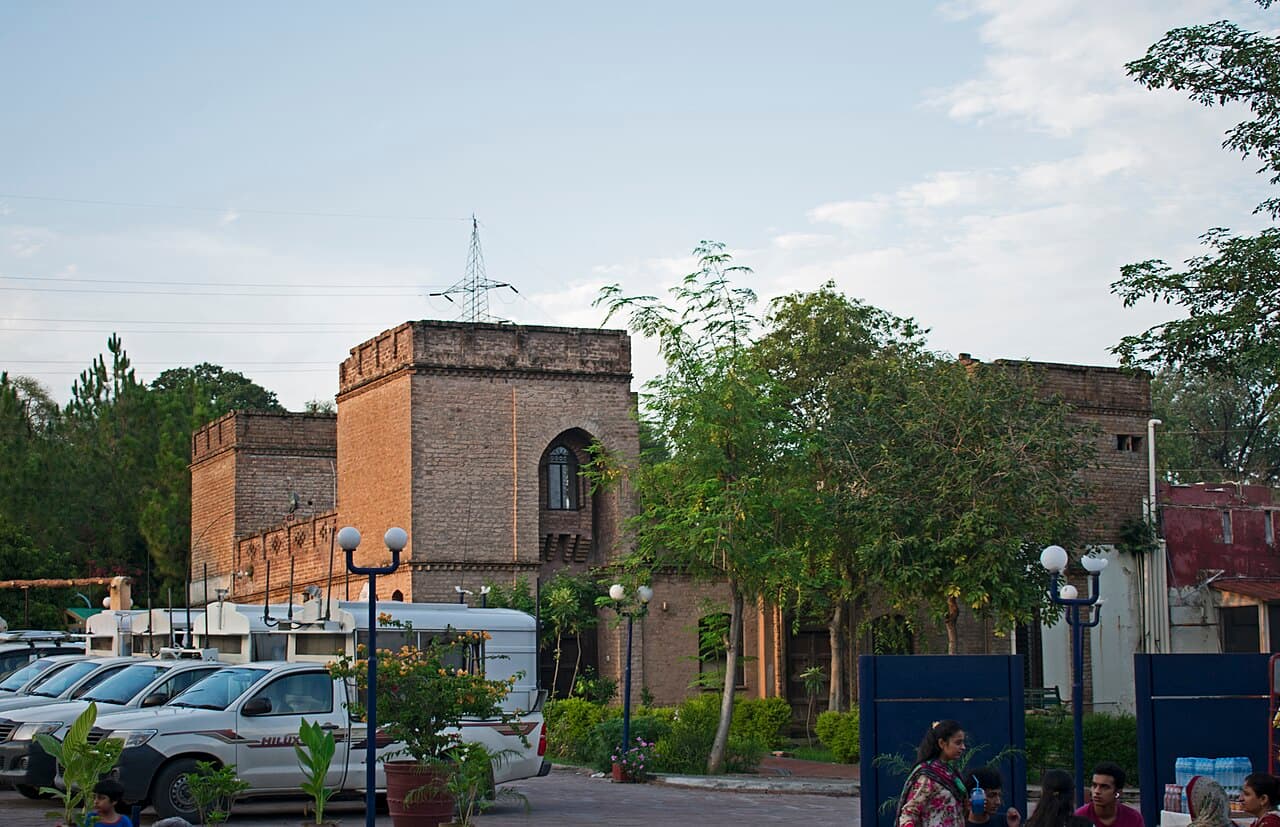
Lok Virsa calls the National Heritage Museum Pakistan's first state museum of ethnology. Its page describes exhibit halls devoted to folk heritage, traditional lifestyles, music, crafts and festivals, using dioramas and visual narratives to connect past and present. That makes it a strong starting point for understanding how cultural practices are represented, not simply a warehouse of decorative objects.
Move by theme rather than trying to retain every regional label. Compare how clothing, tools, musical traditions or domestic settings are presented across communities. Ask whether the display shows an object as historical, living or both. The museum's own language emphasises communities from mainstream and remote regions; notice how space and explanation are distributed. Do not convert a museum display into a claim that every member of a community lives or dresses that way now.
Sources: National Institute of Folk and Traditional Heritage03
Compare the Pakistan Monument Museum narrative
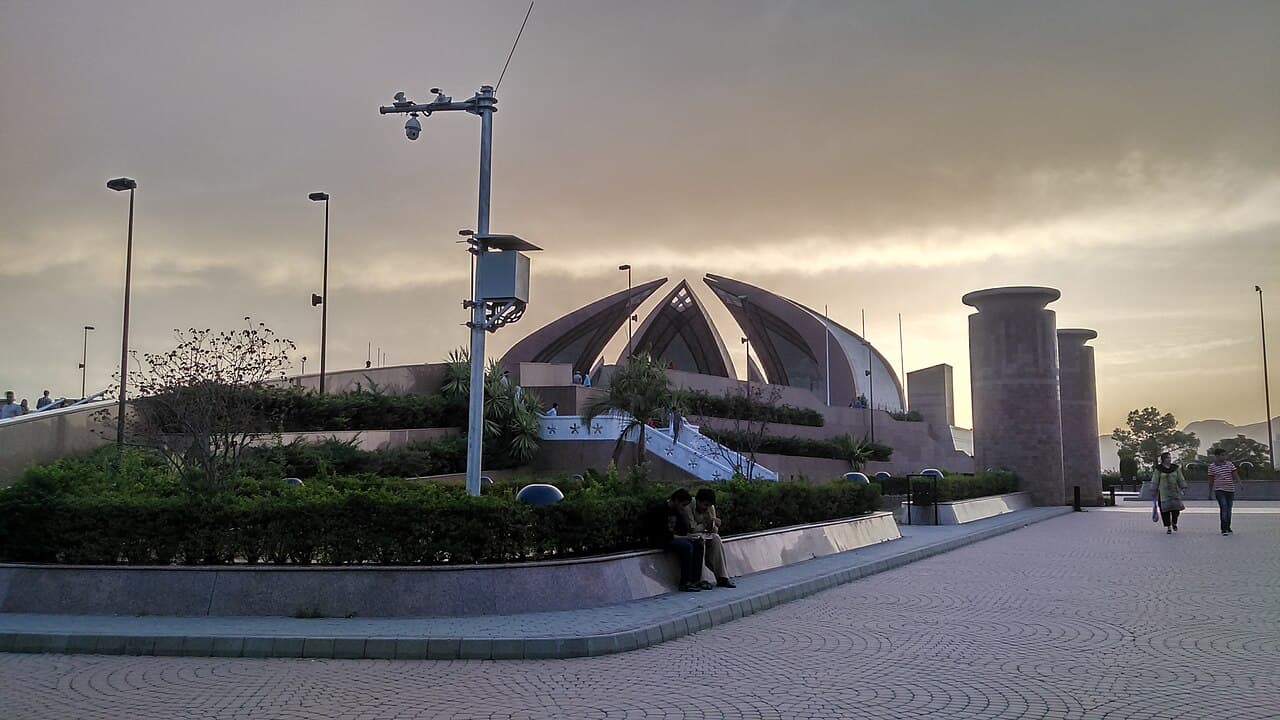
Pakistan Monument Museum has a more chronological national frame. Lok Virsa's official page says it traces ancient social development, the struggle for Pakistan, the country's establishment and major achievements after independence. It also identifies a reference library, audiovisual material and a panorama hall. Those elements signal a museum concerned with political memory and a national timeline rather than only material culture.
Use the transition from Lok Virsa to ask what changes when the unit of storytelling changes from communities and traditions to a nation-state. Look for choices of sequence, named figures, maps, replicas and reconstructed scenes. The useful comparison is not to declare one account more authentic after a quick visit. It is to see how two public institutions select different scales of Pakistani history. The nearby monument grounds can provide a pause, but the museum deserves its own reading rather than serving as an appendix to a photo stop.
Sources: National Institute of Folk and Traditional Heritage; Capital Development Authority04
Take the natural-history branch
PMNH is the better branch when the group wants science, specimens and environmental systems. Its galleries page identifies bio, Tethys, gemstone, palaeontology, ecology and dinosaur groupings, and describes displays of fossils, skeletons, flora, fauna and marine life. That range supports a visit organised around evidence: what kind of specimen is shown, where it came from, what time scale it represents and how a reconstruction differs from an original object.
Families can divide the visit into three hunts: one geological process, one adaptation and one conservation problem. Adults should resist supplying invented explanations when a label is unclear; record the question and consult the museum's material. PMNH sits on Garden Avenue in Shakarparian, making it geographically compatible with Lok Virsa, but a full natural-history visit can easily replace rather than supplement another large museum.
- Find one specimen that records deep time.
- Find one display about a living ecosystem.
- Identify where the exhibit uses a model, diorama or reconstruction.
05
Take the visual-art branch
Choose the National Art Gallery branch when the day's question concerns artistic interpretation rather than comprehensive national coverage. A 2026 Press Information Department page documents a PNCA exhibition in Gallery No. 1 and the Grand Hall and identifies the venue as the National Art Gallery at PNCA. That confirms active exhibition use, but it does not establish the programme for a future date. PNCA's own site was not reachable during this research, so direct confirmation is especially important.
At a changing exhibition, read the curatorial statement before judging individual works. Select three works that answer the day's question in different ways, then compare material, scale and historical reference. Do not promise a particular artist or room unless the current PNCA programme confirms it. This branch is in F-5/1 rather than the Garden Avenue museum cluster, so treat it as a deliberate transfer, not a casual extra stop.
Sources: Press Information Department, Government of Pakistan; Islamabad Capital Territory Administration06
Pick one of three workable formats
A compact culture day pairs the National Heritage Museum with Pakistan Monument Museum and leaves time to compare their narratives. A family science day pairs Lok Virsa with PMNH, using craft and social life against fossils and biodiversity. An art-and-memory day pairs Pakistan Monument Museum with the National Art Gallery, accepting the transfer between Shakarparian and F-5. These are editorial formats, not institution-approved tours.
Keep the third venue genuinely optional. If the group is still discussing the first collection over a break, that is evidence of a successful visit, not a scheduling failure. Museum fatigue makes the final galleries blur together and encourages careless claims. A shorter route also leaves room for prayer, food, transport and current entry procedures without assigning invented timings.
- Compact comparison: Heritage Museum plus Pakistan Monument Museum.
- Family science: Heritage Museum plus PMNH.
- Art and memory: Pakistan Monument Museum plus National Art Gallery.
07
Finish with an evidence note
End the day by separating three columns: what the display explicitly stated, what you observed and what you still need to verify. This is particularly useful where a reconstructed room, artistic image or national narrative feels self-explanatory. Museums are arguments built from selected material; treating every visual detail as literal evidence produces confident mistakes.
A useful final conversation asks each person to choose one display that complicated an assumption. Then record the institution and gallery so the claim can be traced later. Avoid copying long label text or presenting a quick impression as expert analysis. The goal is a culture day that improves how you read public history, science and art—not a checklist proving that you entered the maximum number of buildings.
Useful answers
Reader questions
Which two Islamabad museums make the clearest pair?
The National Heritage Museum and Pakistan Monument Museum offer the clearest comparison because one centres living traditions and ethnography while the other follows a national historical narrative. They are also part of the Shakarparian cultural area.
Sources: National Institute of Folk and Traditional Heritage; National Institute of Folk and Traditional Heritage; Capital Development AuthorityIs PMNH mainly for children?
No. Its official galleries cover biodiversity, geology, palaeontology and marine and terrestrial natural history. Families can use simple observation prompts, but the collections also support serious adult interest.
Sources: Pakistan Museum of Natural HistoryCan I assume the National Art Gallery has a specific exhibition?
No. Official records show that PNCA hosts exhibitions, but programmes change. Confirm the current exhibition and visitor arrangements directly; the 2026 event page cited here is evidence of venue use, not a permanent schedule.
Sources: Press Information Department, Government of PakistanShould I visit all four institutions in one day?
Only if the purpose is a very quick orientation. For useful attention, select two around one question and keep a third optional. The National Art Gallery also requires a transfer from the Shakarparian cluster.
Sources:Read the evidence
Sources and further reading
These sources support the relevant sections above. Plans and comparisons are editorial suggestions. Check operators for current arrangements.
- National Heritage Museum – Lok Virsa ↗National Institute of Folk and Traditional Heritage · Research date 14 September 2026
The museum's ethnographic role, history, display approach and focus on living traditions, crafts, lifestyles, music and festivals.
- Pakistan Monument Museum – Lok Virsa ↗National Institute of Folk and Traditional Heritage · Research date 14 September 2026
The museum's chronological scope from social development through the Pakistan movement and post-independence achievements, plus its supporting facilities.
- Galleries - pmnh.gov.pk ↗Pakistan Museum of Natural History · Research date 14 September 2026
PMNH gallery themes and its use of fossils, skeletons, flora, fauna, marine material and other natural-history displays.
- Aurangzeb Khan Khichi Inaugurates Rare Photographic Chronicle of Quaid-i-Azam Muhammad Ali Jinnah at PNCA ↗Press Information Department, Government of Pakistan · Research date 14 September 2026
Current official evidence that PNCA's National Art Gallery uses named galleries and the Grand Hall for curated exhibitions.
- Visitors and Tourists Attraction ↗Islamabad Capital Territory Administration · Research date 14 September 2026
Official identification of PMNH, Lok Virsa and the National Art Gallery as Islamabad museums and galleries.
- CDA-Destination ↗Capital Development Authority · Research date 14 September 2026
Lok Virsa's position near Shakarparian and the official visitor context for the Pakistan Monument area.