Margalla Hills Trail 5: Complete Guide (Route, Difficulty, Time & Tips)
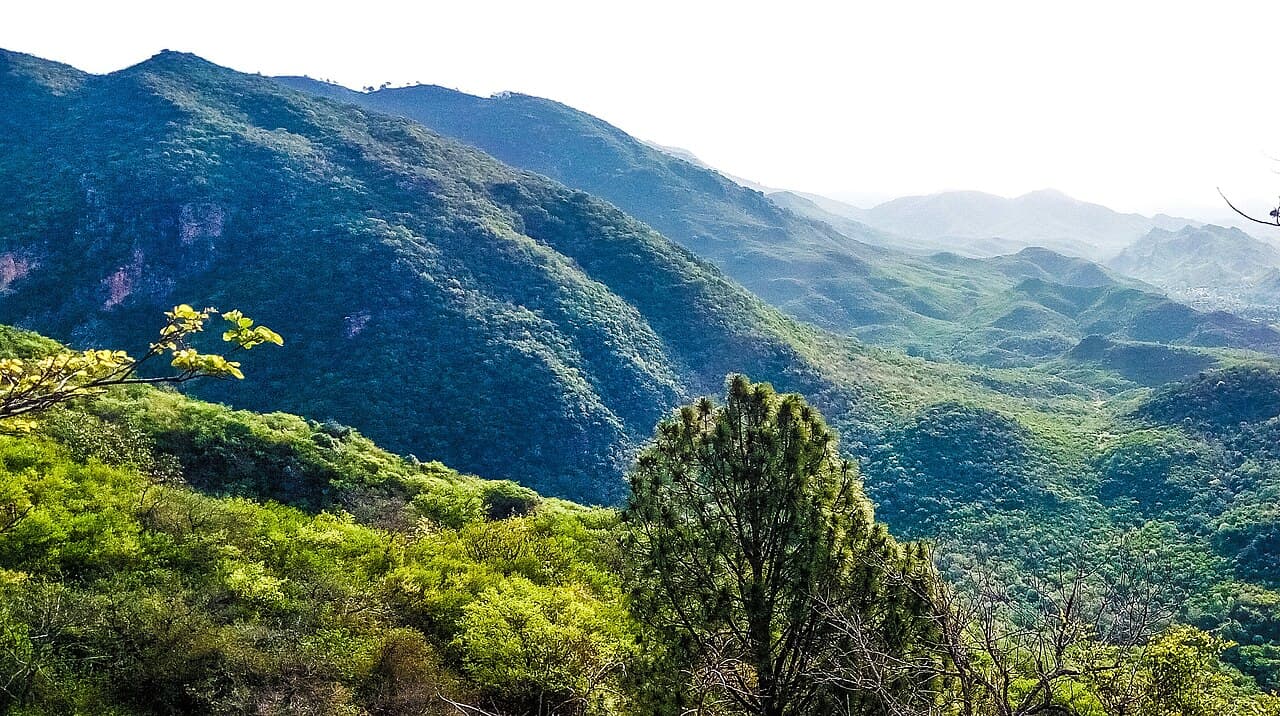
Trail 5 is Islamabad's best-kept hiking secret — a moderate 3km climb to a ridge viewpoint above 1,100m with the entire city bowl visible below. Full route breakdown, GPS coordinates, IWMB rules, wildlife warnings, and what to bring.
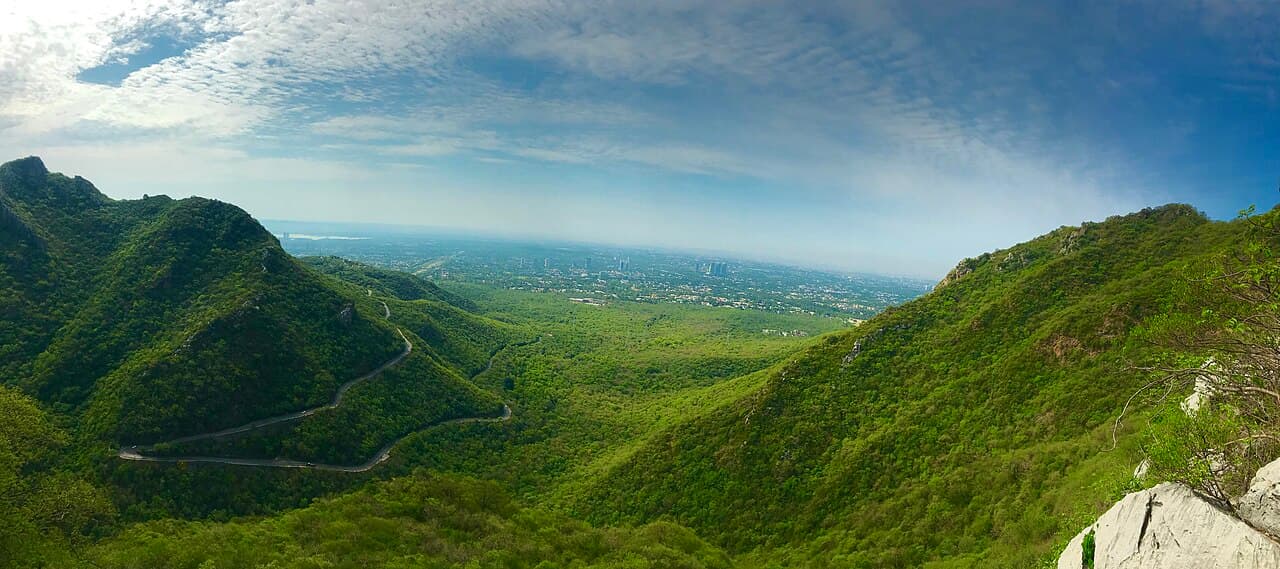
Most Islamabad hikers know Trail 3. Trail 5 is what they graduate to. Quieter, steeper, more rewarding, and — on a clear October morning — one of the genuinely great urban hikes in South Asia. The trail climbs from the Margalla foothills to a ridge viewpoint where the entire grid of Islamabad's sectors spreads below you, with Rawal Lake glinting in the middle distance and — on the clearest winter days — distant snowfields visible to the north. This guide gives you everything you need to do it properly.
Trail Basics at a Glance
- Trailhead GPS: 28°44'11"N, 73°09'37"E — the Trail 5 gate on the Daman-e-Koh access road, approximately 2.4km from the F-6/Margalla Road junction
- Distance: 3 km one way (6 km return)
- Elevation gain: 285 m
- Summit elevation: approx. 1,110 m above sea level
- Estimated time: 1.5 hours ascending / 1 hour descending
- Difficulty: Moderate — suitable for anyone with basic fitness; not suitable for young children or those with knee problems on the descent
- IWMB entry fee: PKR 20 at the main kiosk
Step-by-Step Route Description
Gate to First Fork (0–0.8 km)
The trail begins at the IWMB gate on the Daman-e-Koh road. Pay your PKR 20 entry fee at the kiosk and sign in — the rangers log entry and exit times, which matters for safety. The first section climbs steadily through dense mixed forest: shisham, paper mulberry, and wild olive. The path is wide and well-maintained here, compacted earth with periodic stone steps on the steeper pitches. At the 0.8km mark you reach the first fork. Bear right — the left branch loops back toward the Daman-e-Koh road and does not gain meaningful elevation. The right branch is Trail 5 proper.
First Fork to Rocky Ridge Section (0.8–1.8 km)
After the fork the trail narrows and the gradient increases. The path crosses a seasonal stream bed at approximately 1.1 km — in dry months this is a dry channel of smooth stones; in monsoon season it carries running water and requires careful footing. The tree cover thins progressively as you gain height, replaced by scrub and wild thyme. At around 1.5 km the character of the trail changes: the earth path gives way to exposed rock — sandstone and quartzite — and the route requires more active route-finding. Look for the painted orange markers on boulders; they are present but not always immediately obvious. This rocky ridge section is the crux of the trail in terms of effort.
Monkey Territory (1.8–2.4 km)
Between 1.8 and 2.4 km the trail passes through the core territory of the Margalla Hills' grey langur monkey colony. These are large primates — adult males can reach 75 cm at shoulder height — and they are entirely habituated to hikers. Do not feed them under any circumstances. Feeding langurs has made some individuals aggressive toward hikers carrying food bags; a monkey snatching a backpack from a surprised hiker is not a rare event on this section. Keep food sealed inside your bag and hold your pack by the top handle rather than the shoulder strap when monkeys are visible nearby. They are harmless if not provoked or offered food. Watching them move through the canopy — long-limbed and fluid — is one of the trail's legitimate pleasures.
Summit Viewpoint (2.4–3.0 km)
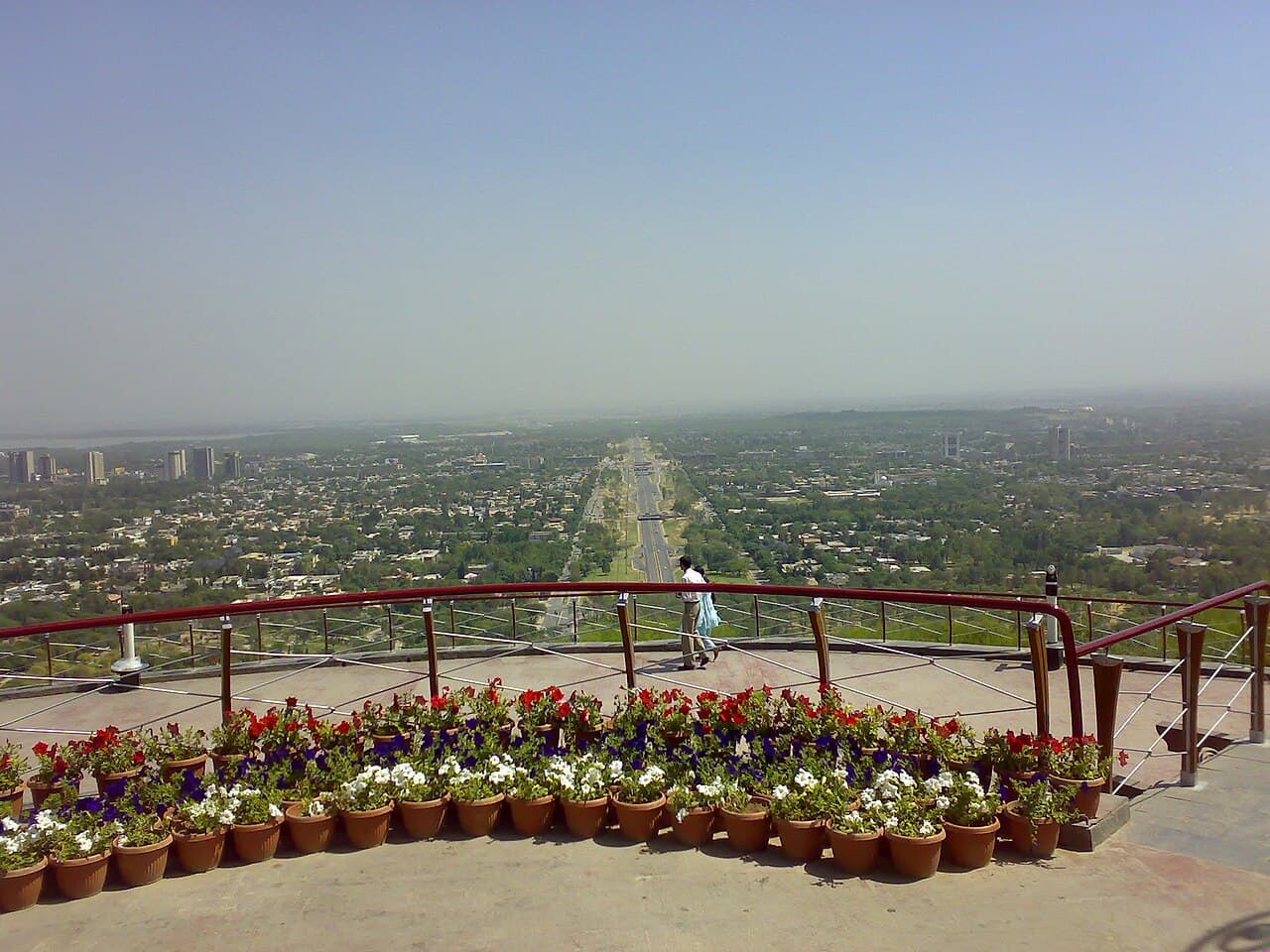
The final 600 metres to the summit clearing is a sustained steep section on mixed rock and compacted earth. The grade eases in the last 100 metres before the ridge top. The summit is a clearing of roughly 40 square metres with a low stone wall on the northern edge — a natural seating area that feels deliberately placed for the view it frames. The city of Islamabad spreads below in its full planned geometry: the regular grid of F and G sectors, the dome of Faisal Mosque visible to the southwest, the dark wedge of Shakarparian Park. Rawal Lake, 8 km to the east, catches the light at almost any hour. On clear winter days — typically November through February — snow-covered peaks are visible on the northern horizon, 200+ km distant.
What to Bring
- Water: Minimum 1.5 litres per person. There is no water source on the trail. In summer, carry 2.5 litres.
- Footwear: Proper trail shoes or hiking boots. No sandals, no flip-flops — the rocky ridge section genuinely requires grip and ankle support.
- Sun protection: Sunscreen (SPF 50+) and a hat. The upper section has no shade.
- Phone: Fully charged. Cell coverage on Trail 5 is patchy above 900 m; the last reliable signal is around the 1.5 km mark. GPS offline maps (Maps.me or OsmAnd with Pakistan tiles downloaded) are recommended.
- Snacks: Sealed in an inner bag, not a loose outer pocket — see the monkey territory note above.
Best Season
October through April is the optimal window. October and November offer the best visibility and comfortable temperatures (12–24°C on the trail). February and March add spring wildflowers. December and January are cold on the upper ridge (4–10°C) but offer extraordinary clarity.
Avoid May through September unless you are experienced with heat hiking. July temperatures on the rocky upper section exceed 38°C by 10 am; the monsoon (July–August) makes the rock section genuinely slippery and increases wildlife activity on the trail. The IWMB issues specific monsoon advisories for Trail 5 — check before any summer visit.
Wildlife You May Encounter
- Grey langur monkeys: Abundant between 1.8–2.4 km. Do not feed. Do not make eye contact with dominant males for prolonged periods.
- Wild boar: Most active at dawn and dusk. Avoid Trail 5 after 5:30 pm from October through March when boar foraging peaks near the tree line. If you encounter boar, give them a wide berth and do not run.
- Monitor lizards: Common on the rocky section from April through October. Entirely harmless; they will retreat before you approach them.
- Leopard: Pugmarks are reported seasonally on the upper trail. The Margalla Hills leopard population is real but extremely elusive. Hike in groups of three or more above the 2 km mark as a precaution.
Parking and Getting There
The Trail 5 parking area is a gravel lot on the left side of the Daman-e-Koh road, approximately 100 metres before the gate. Parking is free. On weekend mornings, arrive before 8 am for the best chance of a space — by 9 am on a clear October Saturday, the lot is typically full and cars queue along the access road. The trailhead is not served by public transport; the nearest Metrobus stop (F-6/7 junction) is a 3 km walk from the gate. Ride-hailing to the gate is possible; confirm that your chosen app currently covers the area before setting out.
IWMB Rules Summary
- PKR 20 entry fee, paid at the kiosk. Receipt should be kept until you exit.
- No food waste anywhere on the trail — bin bags are provided at the kiosk.
- No loud music, no loudspeakers. This rule is enforced.
- Pets must be on a leash at all times on all Margalla trails.
- No open fires. No smoking beyond the designated area at the trailhead.
- Sign both in and out at the kiosk — the rangers use this for safety accounting.
Story
Nature
Reading time
7 min
Legacy editorial
First published 5 June 2025
Verify changing facts and prices independently.
More scenes from the destination
General destination planning
Check current details before you go
These official links are general planning resources, not evidence for this article. Opening hours, fares, prices, access rules and businesses can change, so confirm details independently for your dates.
Taqi Naqvi
AI product builder, writer, and Islamabad enthusiast. Building the Top 10 network to document the best of Pakistan's cities - honestly.
Connect on LinkedIn →